Introducing the VCF Automation Assessment Tool
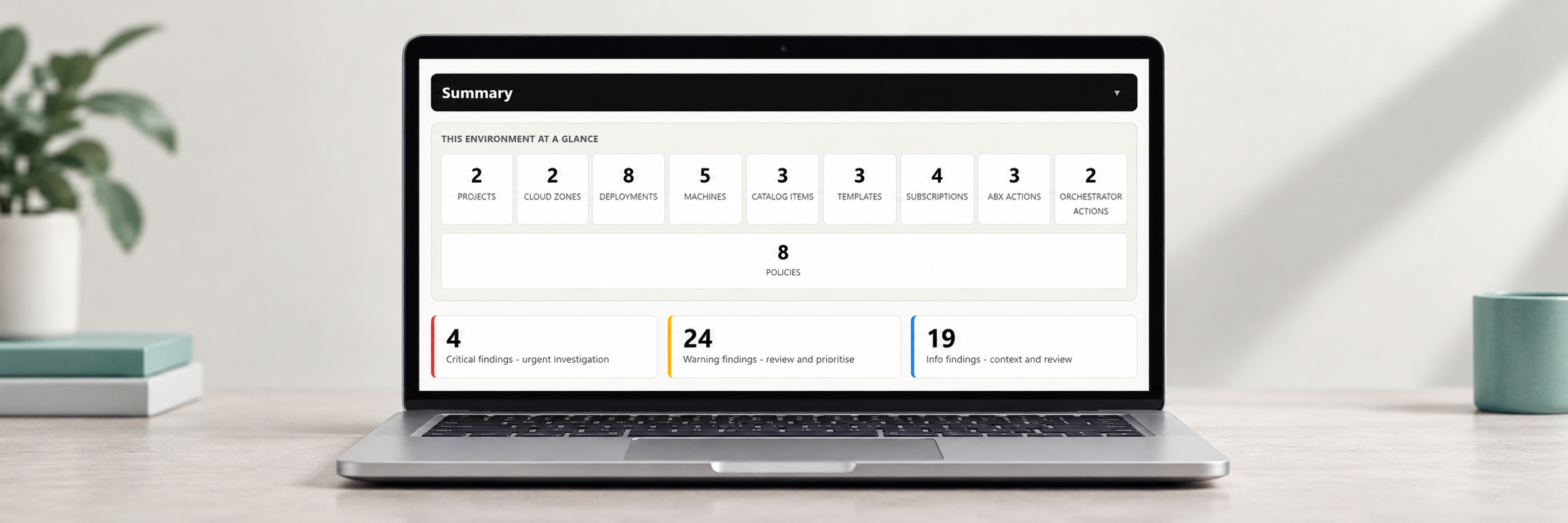
Understanding an established VCF Automation environment takes more than counting projects and deployments. You need to know how its configuration fits together, who can request its services, and which parts need attention. I created the VCF Automation Assessment Tool to bring that information into one report. It reads the platform’s REST APIs and produces a self-contained HTML report covering configuration, usage, governance and extensibility. This article introduces the tool and walks through a first assessment of a VCF Automation 8.x environment. The tool currently targets VCF Automation 8.x. Compatibility with VCF Automation 9 VM Apps organisations has not been verified. All Apps organisations are not supported. The source and full documentation are available in the VCF Automation Assessment Tool repository. The tool combines an inventory with findings that identify potential problems and configuration worth reviewing. It is read-only against the platform: it does not repair configuration, delete deployments or execute the automation it analyses. The report starts with Summary, showing inventory counts, severity totals and a findings table. Assessment Coverage follows, then separate sections let you work through each area in more detail. For example, a deployment can fail while still holding machines. The report identifies that situation so you can investigate the resources that remain. Other checks highlight exhausted project quotas, invalid templates, disabled…